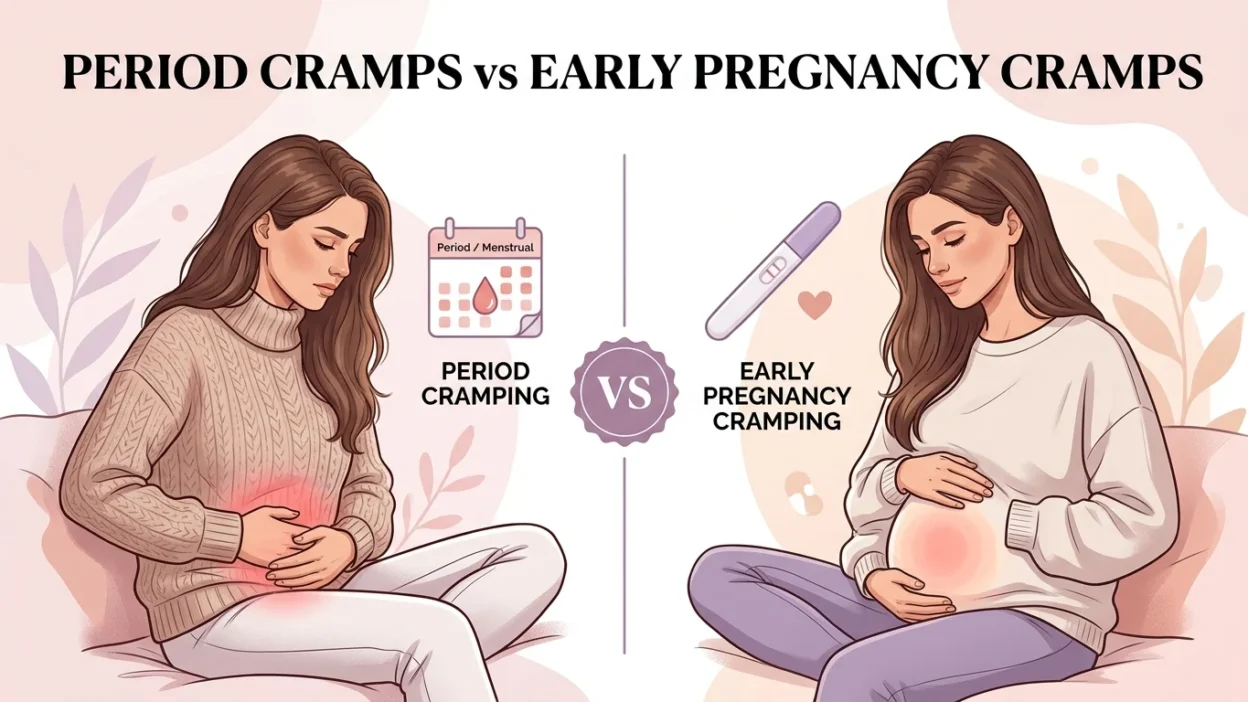
Understanding the difference between period cramps and early pregnancy cramps can be confusing, especially when both cause discomfort in the lower abdomen. These two types of cramps may feel similar, but their timing, intensity, duration, and accompanying symptoms can offer useful clues. Knowing what to look for can help you understand your body and decide what to do next.
Period cramps usually happen shortly before or during menstruation. Early pregnancy cramps may occur around the time a period is expected or during the first few weeks of pregnancy. Some people describe pregnancy cramps as mild pulling, stretching, or pressure, while menstrual cramps often feel like aching or tightening. However, everyone experiences these symptoms differently, and there is no single feeling that confirms pregnancy. If pregnancy is possible, a home pregnancy test is more reliable than comparing cramps alone. Understanding the differences can help you make an informed decision without relying on symptoms that may overlap.
Quick Answer
Period cramps usually occur before or during a menstrual period and may come with bleeding, bloating, and lower back pain. Early pregnancy cramps are often mild and may feel like pulling or stretching in the lower abdomen. However, both can feel similar. A pregnancy test is the best way to check for pregnancy.
Why Do People Confuse Period Cramps and Early Pregnancy Cramps?
People often confuse these cramps because they affect similar areas of the body and can happen around the same time in the menstrual cycle.
Both may cause:
- Mild or moderate lower abdominal pain.
- A feeling of pressure or tightness.
- Lower back discomfort.
- Bloating or changes in digestion.
- Symptoms that appear before an expected period.
Hormonal changes can also cause similar symptoms in the days before menstruation and during early pregnancy.
The main difference is the context. Period cramps are associated with the menstrual cycle and usually improve as menstrual bleeding progresses. Early pregnancy cramps may occur without a period, although light spotting can sometimes occur during early pregnancy.
Important: Cramping alone cannot confirm or rule out pregnancy. Some pregnant people have no cramps, while some people experience cramps before their periods without being pregnant.
First Word: What Are Period Cramps?
Period cramps are pains in the lower abdomen that occur before or during menstruation. The medical term for painful periods is dysmenorrhea.
During menstruation, the uterus contracts to help shed its lining. Substances called prostaglandins help trigger these contractions. Higher prostaglandin levels can contribute to stronger cramps.
What Do Period Cramps Feel Like?
Period cramps commonly feel like:
- A dull ache in the lower abdomen.
- A squeezing or tightening sensation.
- Waves of pain that come and go.
- Pain that spreads to the lower back or thighs.
- Discomfort that becomes stronger during the first days of bleeding.
The pain may be mild, moderate, or severe. Some people can continue their normal activities, while others find it difficult to work, study, or exercise.
When Do Period Cramps Start?
Period cramps often begin one or two days before menstruation or around the start of menstrual bleeding. They commonly improve within two or three days, although the duration varies.
Other Symptoms of Period Cramps
Period cramps may occur alongside:
- Menstrual bleeding.
- Bloating.
- Breast tenderness.
- Headaches.
- Fatigue.
- Diarrhea or nausea.
- Mood changes.
These symptoms are not exclusive to menstruation, so they should not be used alone to identify the cause of cramps.
Second Word: What Are Early Pregnancy Cramps?
Early pregnancy cramps are mild or moderate abdominal sensations that can occur during the first weeks of pregnancy. They may feel like menstrual cramps, gentle pulling, stretching, or pressure in the lower abdomen.
Early pregnancy involves hormonal changes and changes in the uterus. These changes may contribute to mild discomfort, although cramping can have several possible causes.
What Do Early Pregnancy Cramps Feel Like?
Early pregnancy cramps may feel like:
- Mild menstrual-like aches.
- Gentle pulling on either side of the lower abdomen.
- Light pressure or fullness.
- Occasional tightening that comes and goes.
- Mild discomfort without menstrual bleeding.
Not everyone experiences these sensations. Their presence, absence, location, or intensity cannot reliably establish whether pregnancy has occurred.
When Do Early Pregnancy Cramps Start?
Some people notice cramping around the time their period is expected or during the first weeks after conception. Others have no noticeable cramps at all.
Timing varies depending on ovulation, implantation, and individual differences. Cramping does not prove that implantation has happened.
Other Early Pregnancy Symptoms
Early pregnancy may also involve:
- A missed period.
- Breast tenderness or swelling.
- Unusual tiredness.
- Nausea, sometimes with vomiting.
- More frequent urination.
- Sensitivity to certain smells.
- Light spotting.
Many of these symptoms also occur before menstruation or because of other health conditions. A pregnancy test is needed to check for pregnancy.
Period Cramps vs Early Pregnancy Cramps: Comparison Table
| Feature | Period cramps | Early pregnancy cramps |
| Timing | Usually before or during a period | May occur around an expected period or in early pregnancy |
| Feeling | Aching, squeezing, or throbbing | Mild aching, pulling, or stretching |
| Location | Usually lower abdomen; may spread to back or thighs | Often lower abdomen; location varies |
| Duration | Often strongest during the first days of menstruation | May come and go; duration varies |
| Bleeding | Usually followed by menstrual flow | A period does not occur, though light spotting can happen |
| Other symptoms | Menstrual bleeding, bloating, back pain | Possible missed period, fatigue, breast tenderness, nausea |
| Pain pattern | May intensify as menstruation begins | Often mild, but the pattern varies |
| Pregnancy confirmation | Cramps do not indicate pregnancy | A pregnancy test is needed to confirm pregnancy |
Which is more painful? Period cramps are often more intense because of uterine contractions, but early pregnancy discomfort can also vary. Pain severity alone cannot tell you whether you are pregnant.
When Should You Use Each Term?
These terms describe different situations, so choose the one that matches the likely cause of the discomfort.
Use “Period Cramps” When:
- The pain occurs before or during menstrual bleeding.
- You recognize the discomfort from previous menstrual cycles.
- The cramps follow your usual monthly pattern.
- You are describing pain associated with menstruation.
Example: “I have period cramps, so I am using a heating pad to feel more comfortable.”
Use “Early Pregnancy Cramps” When:
- Pregnancy is possible or has been confirmed.
- You are describing abdominal discomfort during the first weeks of pregnancy.
- You are discussing possible early pregnancy symptoms.
- You want to explain cramps occurring around the time of a missed period.
Example: “I have mild cramps, and my period is late, so I am going to take a pregnancy test.”
Use the term possible early pregnancy cramps if you have not confirmed pregnancy. This wording avoids assuming that pregnancy is the cause.
12 Examples of Period Cramps vs Early Pregnancy Cramps
These examples show how the terms are used in everyday English and health-related conversations.
- Period cramps: “My period cramps started the night before my period.”
- Period cramps: “I usually experience strong period cramps on the first day of menstruation.”
- Period cramps: “A warm heating pad helps ease my period cramps.”
- Period cramps: “My period cramps sometimes spread to my lower back.”
- Period cramps: “She stayed home because her period cramps were painful.”
- Period cramps: “My cramps usually improve after the second day of my period.”
- Early pregnancy cramps: “She noticed mild cramps before taking a positive pregnancy test.”
- Early pregnancy cramps: “Mild cramping can occur in early pregnancy, but it does not confirm pregnancy.”
- Early pregnancy cramps: “I have a missed period and mild cramps, so I plan to take a test.”
- Early pregnancy cramps: “My doctor explained that mild cramps can have several causes during early pregnancy.”
- Both terms: “Period cramps and early pregnancy cramps can feel similar.”
- Both terms: “Because the symptoms overlap, a pregnancy test is more useful than guessing from cramps.”
Common Mistakes When Comparing These Cramps
1. Assuming That Mild Cramps Mean Pregnancy
Mild cramps can happen before a period, during early pregnancy, or for other reasons. They are not proof of pregnancy.
Better approach: Take a pregnancy test if pregnancy is possible.
2. Assuming That Strong Cramps Mean a Period Is Coming
Pain intensity cannot reliably distinguish menstruation from pregnancy. Severe pain may also signal a condition that needs medical attention.
Better approach: Consider your menstrual timing, take a pregnancy test when appropriate, and seek medical advice for severe or unusual pain.
3. Treating Spotting as a Certain Sign of Implantation
Light spotting can occur in early pregnancy, but it can also happen around menstruation or for other reasons. The appearance of blood cannot establish implantation.
Better approach: Use a pregnancy test rather than relying on spotting.
4. Thinking That No Cramps Means No Pregnancy
Some people experience no noticeable cramping during early pregnancy.
Better approach: If pregnancy is possible, test even if you have no symptoms.
5. Ignoring a Missed Period
A late period may be associated with pregnancy, stress, illness, hormonal changes, or other factors.
Better approach: Take a home pregnancy test if pregnancy is possible, especially after your expected period.
6. Waiting Too Long When Pain Is Severe
Severe abdominal pain should not be dismissed as ordinary period cramps or normal early pregnancy discomfort.
Better approach: Seek urgent medical care for severe or worsening pain, especially with possible pregnancy, heavy bleeding, dizziness, fainting, or shoulder-tip pain. These can be warning signs of an ectopic pregnancy or another serious condition.
Memory Trick: How to Remember the Difference
Use this simple reminder:
Period = Menstrual flow. Pregnancy = Test to know.
- Period cramps: Usually connected to the start of menstrual bleeding.
- Early pregnancy cramps: May occur without a period, but symptoms alone cannot confirm pregnancy.
- Pregnancy test: The practical way to check whether pregnancy is the cause of your symptoms.
Remember that this is a learning aid, not a medical rule. Menstrual and pregnancy symptoms can overlap.
American vs British English
The expressions period cramps and early pregnancy cramps are understood in both American and British English.
| Expression | American English | British English |
| Period cramps | Common | Common |
| Menstrual cramps | Common | Common |
| Period pain | Understood and used | Very common |
| Painful periods | Common | Common |
| Menstruation | Common in medical contexts | Common in medical contexts |
American speakers often use period cramps or menstrual cramps. British speakers also commonly use period pain.
Examples:
- American English: “I have menstrual cramps today.”
- British English: “I have period pain today.”
Both sentences are correct and natural. The choice depends on personal preference, audience, and context.
Similar Words and Related Terms
Learning related vocabulary helps you describe symptoms more clearly.
Menstruation
Menstruation is the monthly process in which the uterus sheds its lining, resulting in menstrual bleeding.
PMS
Premenstrual syndrome (PMS) refers to physical and emotional symptoms that occur before a period. These may include bloating, breast tenderness, mood changes, and cramps.
Dysmenorrhea
Dysmenorrhea is the medical term for painful menstruation. It can involve cramping in the lower abdomen and may affect daily activities.
Implantation
Implantation occurs when a developing embryo attaches to the lining of the uterus. Symptoms alone cannot reliably identify when implantation has occurred.
Spotting
Spotting means light vaginal bleeding that is usually lighter than a typical menstrual period. It can have several causes, including hormonal changes and pregnancy.
Early Pregnancy Symptoms
These are physical changes that may occur in the first weeks of pregnancy, such as a missed period, fatigue, breast tenderness, or nausea. Not everyone experiences the same symptoms.
Ectopic Pregnancy
An ectopic pregnancy occurs when a pregnancy develops outside the uterus, most commonly in a fallopian tube. It can become life-threatening and requires urgent medical assessment.
Final Verdict: Period Cramps vs Early Pregnancy Cramps
Period cramps and early pregnancy cramps can feel very similar, so there is no dependable way to distinguish them by sensation alone.
- Period cramps usually occur shortly before or during menstrual bleeding.
- Early pregnancy cramps may occur around the time of a missed period and can feel like mild menstrual cramps.
- A missed period can be a useful clue, but it is not proof of pregnancy.
- A home pregnancy test is the best first step when pregnancy is possible.
- Severe or unusual pain requires medical attention, particularly if pregnancy is possible.
If you are unsure, consider the timing of your last period, whether your period is late, and whether you have had sex that could result in pregnancy. These details are more useful than trying to identify pregnancy from the feeling of cramps alone.
FAQs:
1. How can I tell the difference between period cramps and early pregnancy cramps?
Period cramps usually occur shortly before or during menstrual bleeding. Early pregnancy cramps may occur around the time your period is expected and may feel like mild pulling or aching. However, the symptoms overlap, so a pregnancy test is the most reliable way to check.
2. Are early pregnancy cramps lighter than period cramps?
They can be, but not always. Some people experience mild discomfort during early pregnancy, while others have stronger pain or no cramps. Menstrual cramps also vary in intensity. Pain severity alone cannot identify pregnancy.
3. Can pregnancy cramps feel exactly like period cramps?
Yes. Early pregnancy cramps can feel very similar to menstrual cramps, including aching or tightening in the lower abdomen. Because the sensations overlap, you cannot reliably distinguish the two based on how they feel.
4. Do early pregnancy cramps happen before a missed period?
Yes, some people notice cramping before their expected period. However, premenstrual cramps can occur at the same time. If pregnancy is possible, take a test from the first day of a missed period or follow the test instructions.
5. Can you have period-like cramps and still be pregnant?
Yes. Mild period-like cramping can occur during early pregnancy, and some pregnant people experience light spotting. However, bleeding and cramps can also indicate a problem, so seek medical advice if symptoms are concerning.
6. When should I take a pregnancy test if I have cramps?
If your period is late, take a home pregnancy test now and follow the instructions carefully. If you do not know when your period is due, the NHS advises testing at least 21 days after the last unprotected sex. If the result is negative but your period still does not arrive, repeat the test after a few days or contact a healthcare professional.
7. Are cramps without bleeding a sign of early pregnancy?
They can occur during early pregnancy, but cramps without bleeding are not a reliable pregnancy sign. They may also be related to ovulation, digestion, or other causes. Take a pregnancy test if pregnancy is possible.
8. When should I worry about cramps if I might be pregnant?
Seek urgent medical care if you have severe or worsening abdominal pain, especially pain on one side, heavy bleeding, shoulder-tip pain, dizziness, or fainting. These symptoms can indicate an ectopic pregnancy or another serious condition. Do not wait for a positive pregnancy test if you have warning signs.
Remember This
- Period cramps are usually linked to menstruation.
- Early pregnancy cramps can resemble period cramps.
- Symptoms alone cannot confirm pregnancy.
- A pregnancy test is more reliable than guessing from cramps.
- Severe pain, heavy bleeding, dizziness, or fainting needs urgent medical assessment.
Conclusion:
Understanding period cramps vs early pregnancy cramps can help you recognize common symptoms and make informed decisions. Period cramps generally occur before or during menstruation, while early pregnancy cramps may happen around the time a period is missed. Both can cause lower abdominal discomfort, and the differences are not always obvious. Looking at timing and other symptoms can provide context, but neither cramps nor spotting can confirm pregnancy.
If pregnancy is possible, take a home pregnancy test at the appropriate time and follow the instructions provided. If the result is negative and your period remains absent, consider testing again or seeking medical advice. Most importantly, do not ignore severe or unusual pain, especially when pregnancy is possible. Understanding your symptoms is helpful, but testing and appropriate medical care provide a safer and more reliable answer.

Nova Turner specializes in imaginative science fiction blending futuristic technology, thrilling adventures, and powerful human emotions. Her innovative storytelling inspires curiosity, creativity, and exploration among readers of every age.