English verb forms can look deceptively similar, and is used, has been used, and was used are a perfect example. All three expressions can describe something being used, but they do not communicate exactly the same time, meaning, or connection to the present. Choosing the right form depends mainly on whether you are talking about a general situation, a past action, or an action that started or happened before now and still matters.
The confusion becomes even greater because all three forms use the passive voice. Instead of focusing on who performs an action, they focus on the thing receiving the action. Once you understand the tense behind each expression, however, the difference becomes much easier to recognize. This guide explains is used vs has been used vs was used with clear definitions, practical examples, common mistakes, and an easy memory trick so you can choose the correct form confidently in everyday and academic English.
Quick Answer
Is used describes a present or general use, was used describes a completed past use, and has been used describes use that happened before now and remains relevant to the present. The correct choice depends on the time and context of the action.
Why People Confuse It
These expressions are confusing because they all contain a form of be + used, and all can be translated similarly in some contexts.
The important difference is the tense:
- Is used → present simple passive
- Was used → past simple passive
- Has been used → present perfect passive
Compare these sentences:
- English is used around the world.
- English was used during the meeting yesterday.
- English has been used in this organization for many years.
The first describes a general fact. The second points to a completed past event. The third connects a past situation with the present.
First Word: “Is Used”
Is used is the present simple passive form.
We use it when something is generally used, regularly used, or currently considered to have a particular purpose.
Structure
Subject + is + past participle
Examples:
- This tool is used by engineers.
- Water is used to clean the equipment.
- This expression is used in formal English.
- The machine is used every morning.
It can describe a habit, general fact, standard procedure, or purpose.
When “is used” is appropriate
Use it when:
- The action happens regularly.
- The statement is generally true.
- You are explaining a purpose.
- The exact time of the action is not important.
Example:
A thermometer is used to measure temperature.
This is a general fact, so the present passive is appropriate.
Second Word: “Has Been Used”
Has been used is the present perfect passive.
It describes something that happened in the past but has a connection with the present. The exact time may be unknown, unstated, or unimportant.
Structure
Subject + has + been + past participle
Examples:
- This method has been used successfully.
- The software has been used by thousands of students.
- The room has been used for several purposes.
- This technique has been used since 2020.
Notice the connection between past and present.
If you say:
This method has been used successfully.
You are not simply reporting an old event. You are emphasizing its relevance or result now.
Important note
Use has been used with singular subjects:
- The system has been used.
- The technique has been used.
With plural subjects, use have been used:
- These systems have been used.
- Several techniques have been used.
Comparison Table
| Expression | Tense | Main Meaning | Typical Use | Example |
| is used | Present simple passive | General, regular, or present use | Facts, habits, purposes | This tool is used for cutting metal. |
| was used | Past simple passive | Completed past use | Finished events at a definite past time | The tool was used yesterday. |
| has been used | Present perfect passive | Past use connected to now | Experience, duration, recent relevance | The tool has been used successfully. |
When to Use Each
Use “is used” for general facts
Choose is used when you are describing how something normally functions or what it is generally used for.
A dictionary is used to find word meanings.
Use “was used” for a completed past event
Choose was used when the action happened at a specific or understood time in the past and is finished.
The old computer was used during the exam yesterday.
Words such as yesterday, last week, in 2022, earlier, and two days ago commonly point toward the past simple.
Use “has been used” for past to present relevance
Choose has been used when something happened before now but the experience, result, or situation is relevant now.
This strategy has been used successfully for many years.
Time expressions such as since, for, recently, already, and so far often work naturally with the present perfect.
Examples
Here are practical examples showing the difference:
- This software is used by professional designers.
- The software was used during yesterday’s presentation.
- The software has been used by our team for five years.
- This word is used in everyday conversation.
- That expression was used in an old English text.
- The expression has been used frequently in recent articles.
- This machine is used to package food.
- The machine was used for the first time last Monday.
- The machine has been used continuously since January.
- This method is used in many schools.
- The method was used in the previous experiment.
- The method has been used in several successful experiments.
- The room is used for meetings.
- The room was used for a conference last weekend.
- The room has been used for several different purposes.
A useful three sentence comparison
The laboratory is used for scientific research.
The laboratory was used for an experiment yesterday.
The laboratory has been used for research since 2018.
The first is a general fact, the second refers to a finished past event, and the third emphasizes a continuing connection with the present.
Common Mistakes
1. Using “was used” for a general fact
Incorrect:
This device was used to measure temperature.
If you mean this is the device’s general purpose, use:
This device is used to measure temperature.
2. Using “has been used” with a finished past time
Incorrect:
The computer has been used yesterday.
Correct:
The computer was used yesterday.
Yesterday identifies a completed time in the past, so the past simple is normally required.
3. Confusing “has been used” with “is used”
These are not always interchangeable.
This method is used in modern classrooms.
This describes a general practice.
This method has been used in our school since 2021.
This emphasizes a situation that began in the past and has a connection to the present.
4. Forgetting “been”
Incorrect:
The system has used by the company.
Correct:
The system has been used by the company.
The passive present perfect requires has/have + been + past participle.
5. Using “has” with plural subjects
Incorrect:
These methods has been used successfully.
Correct:
These methods have been used successfully.
Memory Trick
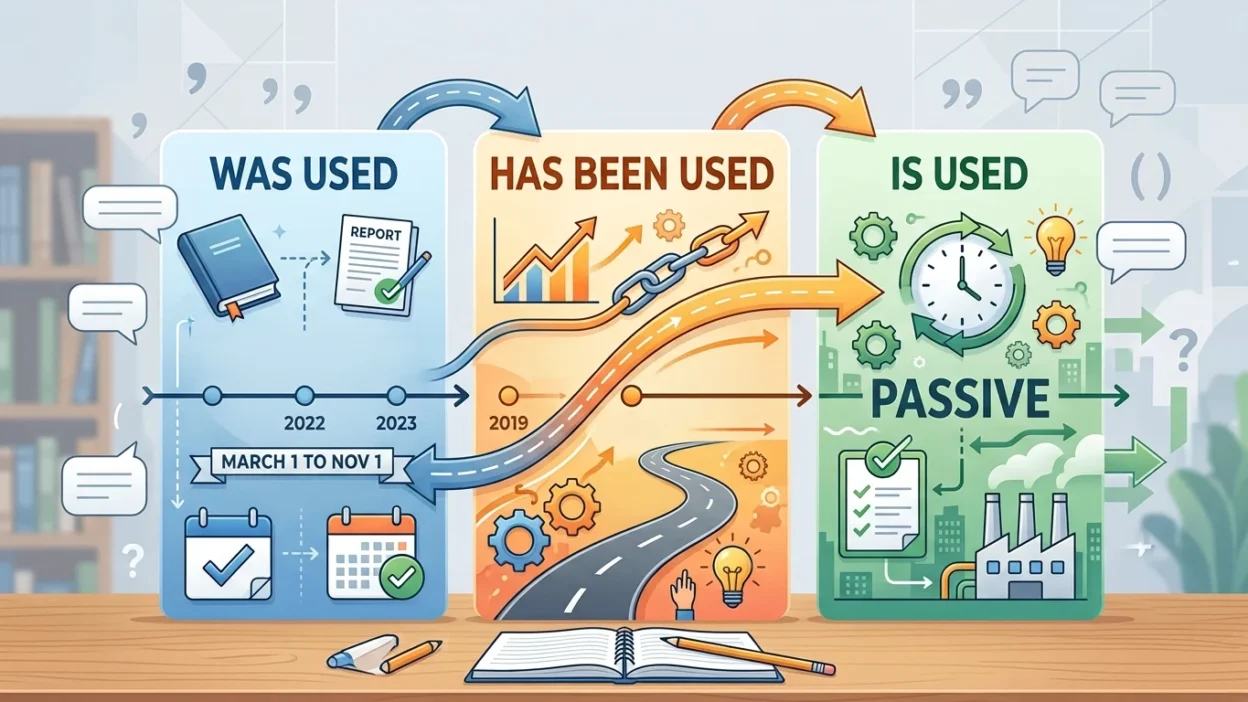
Think of the three forms as three points on a timeline:
- IS used = NOW / generally
- WAS used = THEN / finished
- HAS BEEN used = BEFORE NOW + connection to NOW
A simple memory sentence is:
Is = general, Was = finished, Has been = connected to now.
When you see a time expression, let it guide you.
- Every day / generally → is used
- Yesterday / last year → was used
- Since 2020 / so far / recently → has been used
American vs British English
There is generally no major difference in the basic use of these three passive forms between American and British English. Both varieties use is used, was used, and has been used according to the same tense principles.
One broader difference is that British English tends to use the present perfect more frequently in situations involving a recent past action with a present connection.
For example, British English may favor:
The report has just been completed.
American English can sometimes use the simple past in comparable conversational contexts:
The report just got completed.
However, the fundamental distinction between is used, was used, and has been used remains the same in both varieties.
Similar Words
Several other passive constructions can cause similar confusion.
“Is being used”
This is the present continuous passive.
The computer is being used right now.
It emphasizes an action happening at this moment or around the present time.
“Was being used”
This is the past continuous passive.
The computer was being used when I arrived.
It describes an action that was in progress at a particular time in the past.
“Had been used”
This is the past perfect passive.
The computer had been used before the technician arrived.
It shows that one past action happened before another past event.
“Will be used”
This is the future passive.
The new system will be used next year.
It describes a future action.
Understanding these related forms makes English verb tenses much easier to distinguish.
FAQs
Is “is used” present tense?
Yes. Is used is the present simple passive. It commonly describes general facts, regular actions, purposes, and established practices.
Is “was used” grammatically correct?
Yes. Was used is the past simple passive and describes something that was used at a completed point or period in the past.
What is the difference between “was used” and “has been used”?
Was used normally describes a completed past event, often with a definite past time. Has been used connects a past action or experience to the present.
Can I say “has been used yesterday”?
Generally, no. Yesterday refers to a completed past time, so was used yesterday is the natural choice.
Is “has been used” present or past tense?
It is the present perfect passive. It refers to an action that happened in the past but has a connection with the present.
What is the difference between “is used” and “is being used”?
Is used usually describes a general or regular use, while is being used describes an action currently in progress.
Can “has been used” describe something that is still happening?
Yes. For example:
This building has been used as a school since 2010.
The sentence can describe a situation that began in the past and continues or remains relevant now.
Final Verdict
The difference between is used, was used, and has been used is mainly about time and connection to the present. Use is used for general facts, regular practices, and purposes. Use was used for completed events in the past, especially when a finished time is mentioned. Use has been used when a past action has relevance or a continuing connection to the present.
When you are unsure, look for the timeline rather than simply translating the sentence. Ask yourself: Is this generally true? Did it happen and finish in the past? Or does the past action still matter now? That simple question will usually lead you to the correct passive verb form.
Remember This
Is used = general or present use.
Was used = completed past use.
Has been used = past use connected to the present.
If you remember those three ideas, choosing the correct form becomes much easier.
Conclusion
The expressions is used, was used, and has been used may look almost identical, but their tense and meaning are different. The present simple passive describes what normally happens, the past simple passive reports a completed past action, and the present perfect passive connects a previous action with the present.
Good grammar is not just about memorizing rules; it is about recognizing the timeline and purpose of a sentence. Once you identify whether you are discussing a general fact, a finished past event, or a past action with present relevance, the correct form becomes much more natural.

Adam Aaron writes engaging mystery and adventure novels featuring intelligent characters, unexpected twists, and emotional storytelling. His creative imagination and compelling narratives have earned admiration from readers across generations.