Saying thank you is one of the easiest ways to show appreciation, but choosing the right expression can sometimes be confusing. Many English learners wonder whether they should say “thank you both” or “thanks to both of you.” Although both phrases include gratitude, they are not used in exactly the same way.
The difference lies in their purpose and sentence structure. One is used to directly express appreciation to two people, while the other often explains who deserves credit for something. Understanding this small grammar difference will help you sound more natural in conversations, emails, speeches, and everyday English. In this guide, you’ll learn when to use each phrase, see practical examples, avoid common mistakes, and remember the distinction with a simple memory trick.
Quick Answer
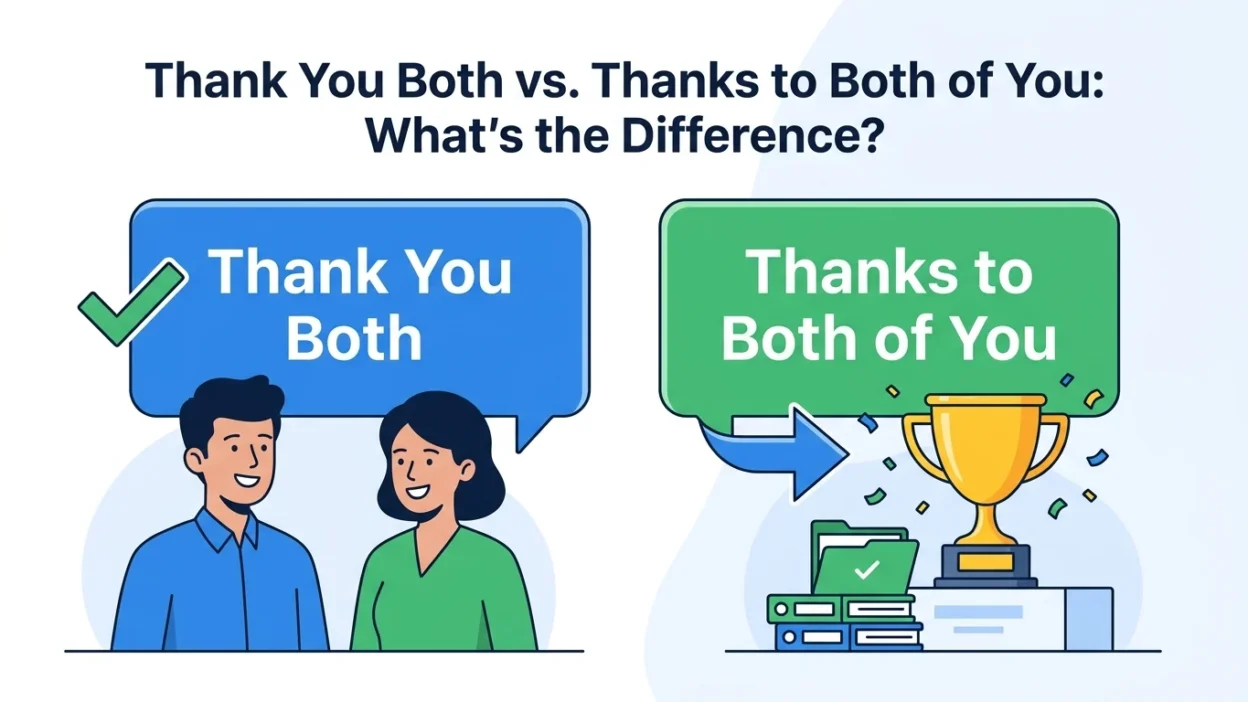
“Thank you both” is used when speaking directly to two people to express gratitude.
“Thanks to both of you” usually means giving credit to two people for a result or success, although it can also introduce a more formal expression of gratitude.
In everyday conversation, “thank you both” is the more common and natural choice when addressing two people.
Why People Confuse It
These two expressions look very similar because they both contain the words thanks, both, and you. Since both relate to gratitude, many learners assume they are interchangeable.
However, they perform different grammatical functions:
- Thank you both = direct expression of thanks.
- Thanks to both of you = identifies the people responsible for something or introduces a statement of appreciation.
The tiny word to changes the meaning more than most people realize.
First Word: “Thank You Both”
Thank you both is a direct expression of appreciation addressed to two people.
It is friendly, natural, and suitable for almost every situation, including:
- Conversations
- Emails
- Meetings
- Family gatherings
- Formal speeches
Meaning
You are directly thanking two individuals.
Examples
- Thank you both for your support.
- Thank you both for attending today.
- Thank you both for your patience.
- Thank you both for helping me move.
- Thank you both for believing in me.
This phrase sounds warm, polite, and natural.
Second Word: “Thanks to Both of You”
Thanks to both of you often introduces the reason something happened because of two people.
It commonly means because of the efforts of both people.
Meaning
It gives credit to two individuals.
Examples
- Thanks to both of you, the project finished early.
- Thanks to both of you, everyone enjoyed the event.
- Thanks to both of you, we solved the problem quickly.
- Thanks to both of you, our team reached its goal.
It can also introduce gratitude:
- Thanks to both of you for everything you’ve done.
Although correct, many native speakers would simply say:
Thank you both for everything you’ve done.
Comparison Table
| Feature | Thank You Both | Thanks to Both of You |
| Main purpose | Direct gratitude | Gives credit or explains a result |
| Speaking directly to two people | ✅ Yes | ✅ Sometimes |
| Explaining success | ❌ No | ✅ Yes |
| Everyday conversation | Very common | Less common |
| Formal writing | Common | Common |
| Natural in speeches | Yes | Yes |
When to Use Each
Use Thank You Both when:
- Speaking directly to two people.
- Writing thank you emails.
- Giving speeches.
- Showing appreciation.
- Ending conversations politely.
Examples:
- Thank you both for your kindness.
- Thank you both for coming today.
- Thank you both for your encouragement.
Use Thanks to Both of You when:
- Giving credit.
- Explaining success.
- Mentioning who made something possible.
- Introducing appreciation in formal writing.
Examples:
- Thanks to both of you, everything went smoothly.
- Thanks to both of you, we reached our target.
- Thanks to both of you for making this possible.
Examples
Here are practical examples showing both expressions in context.
Using “Thank You Both”
- Thank you both for your generous gift.
- Thank you both for staying late.
- Thank you both for helping with dinner.
- Thank you both for your advice.
- Thank you both for supporting my decision.
- Thank you both for joining us today.
Using “Thanks to Both of You”
- Thanks to both of you, we completed the task ahead of schedule.
- Thanks to both of you, the event was a success.
- Thanks to both of you, everyone felt welcome.
- Thanks to both of you, we avoided several mistakes.
- Thanks to both of you for making this celebration unforgettable.
- Thanks to both of you, our business continues to grow.
Common Mistakes
Many learners make these errors:
Using “thanks to” when simply thanking someone
❌ Thanks to both of you.
✅ Thank you both.
Forgetting the purpose
❌ Thank you both, the project succeeded.
✅ Thanks to both of you, the project succeeded.
Mixing sentence structures
❌ Thank you to both of you the project finished.
✅ Thanks to both of you, the project finished successfully.
Memory Trick
Think about the small word “to.”
- Thank you both → Talking to two people.
- Thanks to both of you → Because of two people.
If you’re expressing appreciation directly, choose thank you both.
If you’re explaining who deserves credit, choose thanks to both of you.
American vs. British English
Both American and British English use these expressions naturally.
There is no significant difference in meaning or grammar between the two varieties.
One small difference is style:
- Americans often prefer Thank you both in everyday conversation.
- British speakers also frequently use Thank you both, while Thanks to both of you appears slightly more often in formal speeches and writing when giving credit.
In practice, both phrases are widely understood and accepted in both regions.
Similar Words and Expressions
If you want variety, consider these alternatives:
- Thank you both so much.
- Thanks, both of you.
- Many thanks to both of you.
- I appreciate both of you.
- I’m grateful to both of you.
- My sincere thanks to both of you.
- I can’t thank you both enough.
- Thank you to both of you.
Each expression works slightly differently depending on the level of formality.
Final Verdict
The choice depends on what you want to communicate.
Use thank you both when speaking directly to two people and expressing appreciation.
Use thanks to both of you when giving credit or explaining that something happened because of the efforts of two people.
For most everyday conversations, thank you both sounds simpler, warmer, and more natural.
Frequently Asked Questions
Is “thank you both” grammatically correct?
Yes. It is completely correct and commonly used by native English speakers.
Is “thanks to both of you” polite?
Yes. It is polite and grammatically correct, especially when giving credit or introducing appreciation.
Which expression is more common?
Thank you both is more common in everyday speech.
Can I use them interchangeably?
Not always. Their meanings overlap slightly, but they serve different grammatical purposes.
Is “thank you to both of you” correct?
Yes. It is grammatically correct but sounds slightly more formal than thank you both.
Which phrase is better in an email?
Thank you both is usually the best choice because it is direct, natural, and friendly.
Can “thanks to” mean “because of”?
Yes. In English, thanks to often means because of, usually with a positive meaning.
Remember This
If you’re speaking directly to two people, say:
✅ Thank you both.
If you’re explaining who deserves the credit, say:
✅ Thanks to both of you.
That one small word to is the key to choosing the correct expression.
Conclusion
Although thank you both and thanks to both of you both involve gratitude, they are not perfect substitutes. Thank you both is a direct expression of appreciation addressed to two people, making it the best option for conversations, emails, and speeches. Thanks to both of you, on the other hand, usually highlights that two people are responsible for a positive outcome or introduces a more formal expression of thanks.
By remembering the different roles these phrases play, you’ll communicate more clearly and sound more natural in English. Whenever you’re simply expressing gratitude, thank you both is usually the safest and most idiomatic choice. When you’re recognizing someone’s contribution to a successful result, thanks to both of you fits perfectly. Mastering this small distinction will make your spoken and written English more accurate and confident.

Adam Aaron writes engaging mystery and adventure novels featuring intelligent characters, unexpected twists, and emotional storytelling. His creative imagination and compelling narratives have earned admiration from readers across generations.