When you see momma and mama, they might look like two versions of the same word and in many situations, they are. However, the difference often comes down to tone, culture, personal preference, and context rather than strict grammar. Understanding when to use each can make your writing sound more natural and appropriate.
Whether you’re writing a heartfelt message, a novel, a social media post, or simply wondering which spelling is more common, knowing the subtle distinction helps you communicate more effectively. In this guide, you’ll learn the meanings, usage, examples, regional preferences, common mistakes, and simple tricks to remember the difference between momma vs mama.
Quick Answer
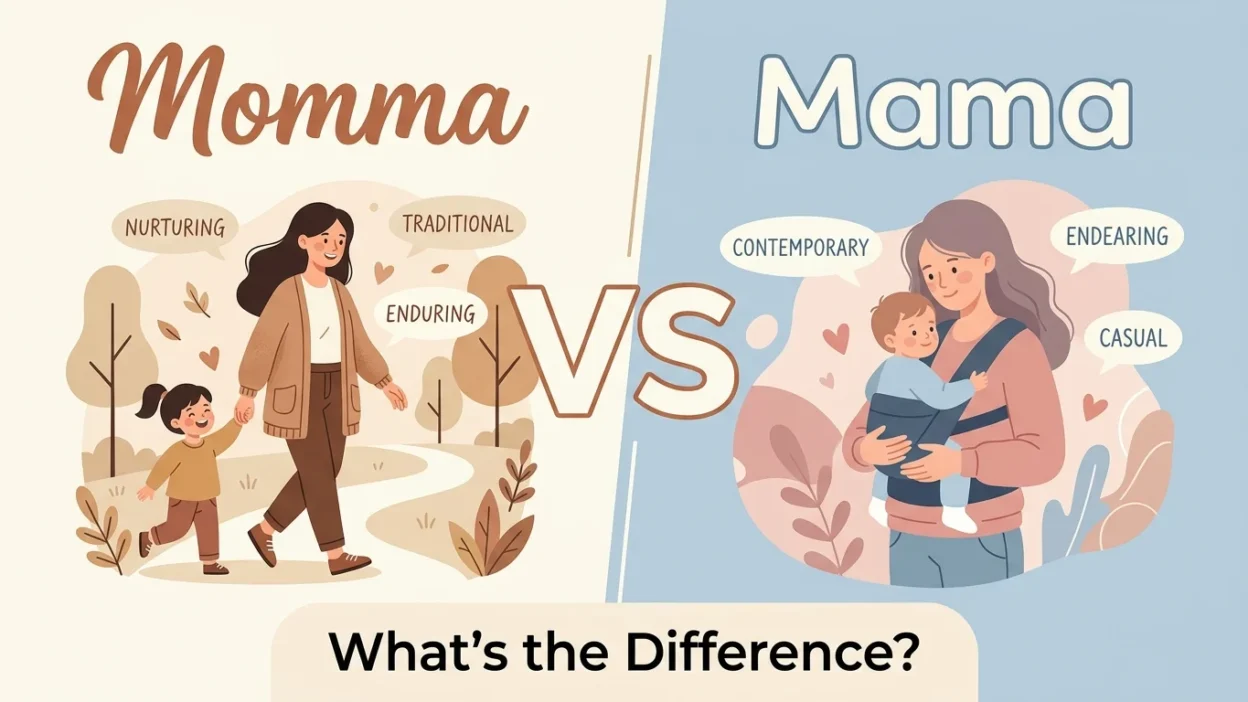
Mama is the more common and widely accepted spelling used to refer to a mother in everyday speech across many English speaking countries. Momma is an informal, affectionate variation that often appears in American English, especially in Southern dialects, songs, literature, and emotional conversations. Both are correct the best choice depends on the tone and audience.
Why People Confuse It
Many English learners and even native speakers mix up momma and mama because both refer to a mother and are pronounced similarly.
The confusion happens because:
- Both express affection.
- Neither is considered formal.
- Regional dialects influence spelling.
- Popular songs, books, and movies use both versions.
- Family traditions often determine which word children learn first.
Unlike grammar rules, there’s no universal rule that says one spelling is always right and the other is wrong.
First Word: Momma
Momma is an affectionate, informal spelling of “mother.”
It is especially common in:
- Southern American English
- Family conversations
- Fiction and storytelling
- Country music lyrics
- Emotional or nostalgic writing
Meaning
Momma expresses warmth, closeness, and deep family affection.
Example
My momma always believed kindness was the greatest strength.
The word often creates a cozy, personal feeling.
Second Word: Mama
Mama is the traditional and internationally recognized informal word for “mother.”
It is one of the first words many babies learn because its sounds are easy to pronounce.
Meaning
Mama simply means mother in an affectionate way.
Common Uses
- Daily conversation
- Children’s books
- Parenting articles
- International English
- Family communication
Example
Mama made my favorite meal for dinner.
Comparison Table
| Feature | Momma | Mama |
| Meaning | Mother | Mother |
| Formality | Informal | Informal |
| Emotional tone | Very affectionate | Affectionate |
| Common in | American English, especially Southern U.S. | Worldwide English |
| Used by children | Yes | Very common |
| Found in literature | Frequently | Frequently |
| Suitable for formal writing | No | Rarely |
| Common in songs | Very common | Very common |
When to Use Each
Choose momma when:
- Writing dialogue
- Creating emotional stories
- Reflecting Southern American culture
- Sharing family memories
- Using a warm, personal tone
Choose mama when:
- Writing general English content
- Referring to mothers universally
- Writing parenting articles
- Speaking naturally with family
- Addressing young children
Both words are acceptable, but your audience and purpose should guide your choice.
Examples
Here are practical examples showing both words in context.
Examples with “Momma”
- My momma taught me to work hard.
- Everyone loved Momma’s homemade pie.
- I called Momma after my interview.
- His momma always encouraged him.
- Momma knows exactly what to say.
- We visited Momma every Sunday.
Examples with “Mama”
- Mama hugged her children tightly.
- I asked Mama for advice.
- Mama smiled proudly at graduation.
- The baby reached for Mama.
- Mama always remembers birthdays.
- My mama loves gardening.
Common Mistakes
Avoid these common errors:
Assuming one is grammatically wrong
Both spellings are correct in informal English.
Using them in formal documents
Instead of writing:
My momma is my emergency contact.
Use:
My mother is my emergency contact.
Ignoring audience expectations
If you’re writing for an international audience, mama may feel more familiar than momma.
Memory Trick
Here’s a simple way to remember the difference:
- Mama = the universal, classic affectionate word for mother.
- Momma = extra warmth and personality, especially in American storytelling and Southern speech.
Think of the extra “m” in momma as adding more emotion.
American vs British English
American English
Both momma and mama are used, though momma appears more often in Southern dialects and informal speech.
British English
British speakers usually prefer mum, mummy, or mam, depending on the region. While mama is understood, it is less common in everyday British English. Momma is rarely used outside literary or cultural contexts.
Similar Words
If you’re looking for alternatives, here are some common options:
| Word | Common Region |
| Mother | Formal English |
| Mom | American English |
| Mum | British English |
| Mummy | British English |
| Mommy | American English |
| Mam | Northern England, Wales, and parts of Ireland |
| Ma | Informal English |
| Mommy Dearest | Literary or humorous reference |
Final Verdict
There is no winner in the momma vs mama debate because both words are correct.
Choose mama if you want a widely recognized, universally understood term. Choose momma when you want to add warmth, personality, or a distinctly American feel to your writing.
The best choice depends on your audience, writing style, and the emotion you want to convey.
Remember This
- Mama is the more universal and widely recognized spelling.
- Momma is an affectionate American variation with a warm, personal tone.
- Both mean mother.
- Neither belongs in formal or academic writing.
- Use the version that best matches your audience and the feeling you want to create.
Frequently Asked Questions
Is “momma” a real word?
Yes. Momma is a recognized informal spelling of “mother,” especially in American English and Southern dialects.
Is “mama” more correct than “momma”?
No. Both are correct. Mama is simply more common worldwide, while momma is more regional and expressive.
Which spelling is more common?
Mama is generally more common across English speaking countries because it is widely used by children and families around the world.
Can I use “momma” in professional writing?
It’s best to avoid both momma and mama in formal writing. Use mother instead unless you’re quoting someone or writing dialogue.
Why do songs often use “momma”?
Many songwriters choose momma because it conveys warmth, emotion, and a conversational tone, especially in country, folk, and blues music.
Is “mama” used outside English?
Yes. Many languages use mama or a similar word to mean “mother,” making it one of the most recognizable family words worldwide.
Do children naturally say “mama” first?
Many children do because the repeating “ma” sound is among the easiest for babies to produce. However, first words vary from child to child.
Conclusion
Although momma and mama both refer to a mother, they carry slightly different emotional and cultural flavors. Mama is the more universal choice, familiar across many English speaking countries and even other languages. Momma, meanwhile, adds a distinctly warm, affectionate touch that is especially common in American English and storytelling.
Rather than thinking of one spelling as right and the other as wrong, focus on the context. If you’re writing formally, choose mother. If you’re writing informally, pick mama for broad appeal or momma when you want to emphasize closeness, nostalgia, or a regional voice.

Willow Evans writes uplifting fantasy stories filled with magical worlds, courageous heroes, and meaningful life lessons. Her imaginative books encourage creativity, kindness, and hope in readers of all ages.