English is full of words that sound similar but have very different levels of acceptance. One such pair is emasculate vs demasculate. If you’ve seen both words online or heard them in conversation, you may wonder whether they mean the same thing or if one is simply incorrect.
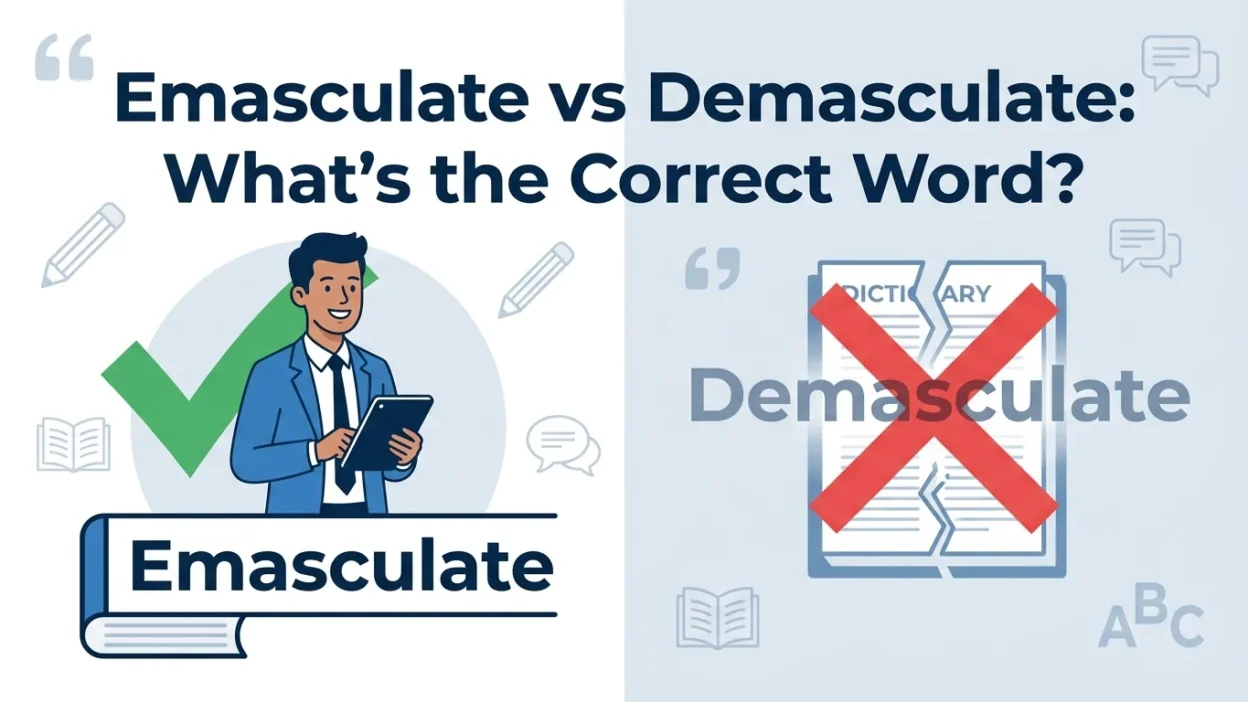
The short answer is that emasculate is the standard English word recognized in dictionaries, while demasculate is generally considered a nonstandard or extremely rare variant. Knowing the difference helps you write more confidently, avoid grammar mistakes, and communicate with precision. In this guide, you’ll learn the meanings, usage, examples, and memory tricks to ensure you always choose the right word.
Quick Answer
Emasculate is the correct and widely accepted English word meaning to weaken, deprive of strength, courage, or masculinity. Demasculate is not recognized as standard English and should generally be avoided in formal or everyday writing.
Why People Confuse It
People often confuse emasculate and demasculate because the prefix de- commonly means “remove” or “reverse,” making demasculate sound logical.
Other reasons include:
- Both words appear to describe removing masculinity.
- Social media and online forums sometimes use demasculate incorrectly.
- People assume adding de- creates a valid opposite or stronger version.
- The pronunciation of both words is very similar.
Despite this confusion, dictionaries and style guides overwhelmingly recognize emasculate as the correct choice.
Emasculate
Emasculate is both a verb and, less commonly, an adjective.
Meaning
It means:
- To deprive someone of strength, confidence, or masculine identity.
- To weaken or make something less effective.
Examples
- Constant criticism can emasculate a person’s confidence.
- The new regulations may emasculate the committee’s authority.
- He felt emasculated after being publicly ridiculed.
- The revised policy emasculated the original proposal.
Synonyms
- Weaken
- Undermine
- Diminish
- Humiliate
- Reduce
- Cripple
- Impair
Demasculate
Demasculate is an extremely rare and nonstandard word.
Although some people use it intending the same meaning as emasculate, it is not accepted in standard modern English and appears only occasionally in historical texts or informal online usage.
Should You Use It?
No. Unless you’re quoting historical material or discussing unusual vocabulary, you should use emasculate instead.
Example
❌ The speech demasculated the team’s confidence.
✔ The speech emasculated the team’s confidence.
Comparison Table
| Feature | Emasculate | Demasculate |
| Standard English | ✅ Yes | ❌ No |
| Found in major dictionaries | ✅ Yes | Rare or absent |
| Common in writing | ✅ Yes | ❌ Very uncommon |
| Appropriate in formal writing | ✅ Yes | ❌ No |
| Meaning | Weaken or deprive of masculinity | Intended to mean the same but nonstandard |
When to Use Each
Use Emasculate when:
- Writing essays
- Academic papers
- Business communication
- Journalism
- Everyday English
- Literature
Avoid Demasculate because:
- It is not standard English.
- It may confuse readers.
- Editors often mark it as incorrect.
- Most dictionaries do not recognize it.
Examples
Here are practical examples using the correct word.
- The harsh remarks seemed to emasculate his confidence.
- Critics argued that the amendment would emasculate the law.
- Public humiliation can emotionally emasculate someone.
- The budget cuts emasculated the department’s effectiveness.
- She warned against policies that emasculate local governments.
- The manager avoided comments that might emasculate employees.
- The revised contract emasculated the company’s negotiating power.
- The novel explores what it means to feel emasculated.
- Good leadership should empower rather than emasculate others.
- His authority was emasculated after the restructuring.
- The decision significantly emasculated the committee’s influence.
- Avoid using demasculate in formal English.
Common Mistakes
Here are mistakes many learners make.
❌ Using demasculate because it sounds logical
Correct:
- Emasculate
❌ Assuming both words are interchangeable
Only emasculate is standard.
❌ Using it only for gender
Remember, emasculate can also describe weakening organizations, laws, policies, arguments, or authority.
Memory Trick
Think of it this way:
Emasculate = Established English
Both begin with the letter E.
If you remember Established = E, you’ll naturally choose Emasculate.
American vs British English
Good news: there is no difference between American and British English in this case.
| American English | British English |
| emasculate | emasculate |
Both varieties recognize emasculate as the standard word.
Similar Words
If you’re looking for alternatives, consider these depending on context:
- Weaken
- Undermine
- Diminish
- Humiliate
- Belittle
- Reduce
- Impair
- Disempower
- Debilitate
- Enfeeble
These words may fit better depending on whether you’re describing emotional impact, authority, or physical strength.
Final Verdict
When comparing emasculate vs demasculate, the answer is straightforward.
Emasculate is the correct, dictionary recognized, and widely accepted English word. It can describe reducing someone’s confidence, masculinity, authority, or overall strength.
Demasculate, on the other hand, is a nonstandard form that should generally be avoided. Using emasculate ensures your writing remains clear, professional, and grammatically correct.
Frequently Asked Questions (FAQs)
Is demasculate a real word?
It has appeared occasionally in historical or informal usage, but it is not recognized as standard English and should generally be avoided.
Which is correct: emasculate or demasculate?
Emasculate is the correct and accepted word.
What does emasculate mean?
It means to weaken someone or something, or to deprive a person of confidence, strength, or masculine identity.
Can emasculate describe things other than people?
Yes. It commonly refers to weakening laws, organizations, arguments, policies, or authority.
Is demasculate found in dictionaries?
Most major dictionaries either omit it entirely or label it as extremely rare or nonstandard.
Is emasculate offensive?
It can be, depending on context. Because it relates to masculinity and identity, use it carefully and respectfully.
Can I use demasculate in academic writing?
No. Academic and professional writing should use emasculate instead.
Conclusion
Choosing between emasculate and demasculate is easier once you know which word is recognized by modern English. Emasculate is the accepted spelling and carries meanings related to weakening, diminishing authority, or depriving someone of confidence or masculine identity. It appears in dictionaries, books, journalism, and academic writing.
While demasculate may occasionally surface in historical texts or informal discussions, it is not standard English and can distract or confuse readers. Sticking with emasculate will make your writing more accurate, polished, and professional.
Remember This
Use emasculate it’s the standard English word. Avoid demasculate in formal and everyday writing because it is nonstandard and rarely accepted.

Adam Aaron writes engaging mystery and adventure novels featuring intelligent characters, unexpected twists, and emotional storytelling. His creative imagination and compelling narratives have earned admiration from readers across generations.