
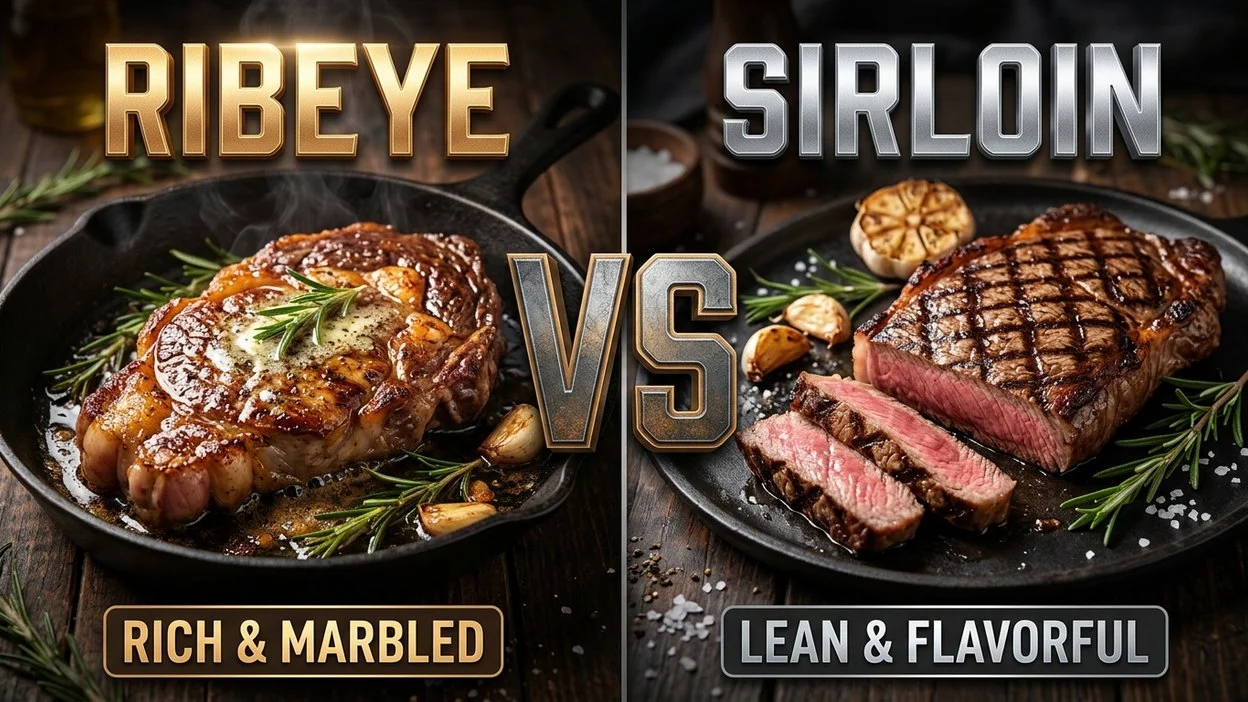
Choosing between ribeye and sirloin can be confusing, especially if you are new to steak. Both are popular cuts of beef, but they differ in fat content, tenderness, flavor, price, and cooking style. Ribeye is usually richer, juicier, and more tender because it contains more marbling, while sirloin is generally leaner, firmer, and more affordable. The best choice depends on your taste, budget, and how you plan to cook your steak.
Understanding the difference between ribeye and sirloin can help you order confidently at a restaurant or choose the right cut at a butcher shop. Ribeye is often preferred by people who enjoy a rich, buttery flavor, while sirloin appeals to those who want a beefy taste with less fat. Neither cut is automatically better than the other. Each has its own advantages, and both can make a delicious meal when prepared properly. In this guide, you will learn how these steaks compare and which one is best for your needs.
Quick Answer: Ribeye vs Sirloin
Ribeye is fattier, richer, and usually more tender than sirloin. It comes from the rib section of the cow and contains abundant marbling, which helps keep it juicy during cooking. Sirloin comes from the rear back section and is generally leaner, firmer, and less expensive. Choose ribeye for a rich steakhouse experience and sirloin for a leaner, budget-friendly meal.
Why Do People Confuse Ribeye and Sirloin?
People often compare ribeye and sirloin because both are common beef steaks served in restaurants, cooked on grills, and sold at supermarkets and butcher shops.
They can also look similar when raw, especially when both cuts are trimmed and cut into steaks. However, their location on the animal affects their texture and fat content.
The main difference is marbling, which means the small streaks of fat distributed throughout the muscle. Ribeye usually has more marbling, while sirloin tends to contain less internal fat.
Both cuts can deliver excellent flavor, but they offer different eating experiences. Ribeye is often rich and buttery, whereas sirloin typically has a cleaner, more straightforward beef flavor.
First Word: What Is Ribeye?
Ribeye is a beef steak cut from the rib section of the cow, usually from the upper rib area. It is known for its generous marbling, rich flavor, and juicy texture.
What Makes Ribeye Special?
The most noticeable feature of ribeye is its fat distribution. The thin streaks of fat inside the meat melt during cooking, helping create a moist texture and rich mouthfeel.
Ribeye steaks may also have a noticeable strip of fat along the edge. Depending on the specific cut, they can contain a large central area of marbling and a distinctive fat section sometimes called the spinalis or ribeye cap.
Common characteristics of ribeye include:
- Flavor: Rich, savory, and buttery.
- Texture: Usually tender and juicy.
- Fat content: Generally high compared with sirloin.
- Price: Often more expensive.
- Best cooking methods: Grilling, pan-searing, and broiling.
Is Ribeye a Good Steak for Beginners?
Yes. Ribeye can be a good choice for beginners because its marbling helps maintain a juicy texture. However, its fat content means that some people may find it too rich.
For the best results, use a hot pan or grill to develop a brown crust while avoiding overcooking the center.
Second Word: What Is Sirloin?
Sirloin is a beef cut from the back of the animal, behind the short loin and toward the rear. It is popular because it offers a strong beef flavor without as much fat as ribeye.
The word sirloin can refer to different cuts depending on the country and butchery system. In the United States, common examples include top sirloin and bottom sirloin.
What Makes Sirloin Special?
Sirloin usually contains less marbling than ribeye. As a result, it tends to feel firmer and may become dry if cooked too long.
However, sirloin is not necessarily tough. A well-cut top sirloin steak can be tender, flavorful, and satisfying when cooked correctly.
Common characteristics of sirloin include:
- Flavor: Beefy and savory.
- Texture: Firm, with tenderness depending on the specific cut.
- Fat content: Generally lower than ribeye.
- Price: Often more affordable.
- Best cooking methods: Grilling, pan-searing, broiling, and slicing for salads or stir-fries.
Is Sirloin a Healthy Choice?
Sirloin can be a useful option for people who want a protein-rich meal with less fat than a typical ribeye. However, the nutritional difference depends on the exact cut, trimming, serving size, and cooking method.
If you are watching your saturated fat or calorie intake, compare nutrition information for the specific steaks rather than relying on the cut name alone.
Ribeye vs Sirloin: Comparison Table
| Feature | Ribeye | Sirloin |
| Location | Rib section | Rear back section |
| Flavor | Rich and buttery | Beefy and savory |
| Tenderness | Usually very tender | Firm to tender, depending on cut |
| Marbling | Usually abundant | Usually less |
| Fat content | Generally higher | Generally lower |
| Juiciness | Often very juicy | Can dry out if overcooked |
| Price | Usually more expensive | Usually more affordable |
| Calories | Often higher for equal cooked portions | Often lower for equal portions |
| Protein | High in protein | High in protein |
| Best for | Rich, indulgent steaks | Leaner everyday meals |
| Grilling | Excellent | Excellent |
| Pan-searing | Excellent | Excellent |
The table describes typical differences. Actual results vary with trimming, grade, thickness, and preparation.
When Should You Choose Ribeye or Sirloin?
The right steak depends on what matters most to you: flavor, tenderness, fat content, price, or cooking method.
When Should You Choose Ribeye?
Choose ribeye if you:
- Prefer a rich, buttery steak.
- Enjoy juicy meat with visible marbling.
- Want a classic steakhouse-style meal.
- Plan to grill or pan-sear a thick steak.
- Do not mind paying more for a fattier cut.
Example: If you are preparing a special dinner and want a juicy steak with a rich flavor, ribeye is an excellent option.
When Should You Choose Sirloin?
Choose sirloin if you:
- Prefer a leaner cut of beef.
- Want a more budget-friendly steak.
- Enjoy a strong, straightforward beef flavor.
- Need steak for salads, sandwiches, or stir-fries.
- Want a versatile cut for everyday cooking.
Example: If you are preparing steak strips for a salad or a weeknight dinner, sirloin may be the more practical choice.
Which Steak Is Better for Grilling?
Both ribeye and sirloin are excellent for grilling.
Ribeye benefits from its marbling, which helps maintain moisture and adds flavor. Sirloin develops a delicious crust and provides a beefy taste without as much fat.
For either cut, preheat the grill, season the steak, and avoid overcooking it. Use a meat thermometer for reliable results.
Which Steak Is Better for Pan-Searing?
Ribeye is especially popular for pan-searing because its fat renders during cooking and helps create a flavorful crust.
Sirloin also works very well in a hot skillet. Since it is usually leaner, pay attention to cooking time to prevent it from becoming dry.
12 Examples of Ribeye and Sirloin in Sentences
These examples show how to use the words naturally when discussing food, shopping, or cooking.
- Ribeye: I ordered a ribeye because I wanted a rich and juicy steak.
- Sirloin: She chose sirloin because she preferred a leaner cut of beef.
- Ribeye: Ribeye usually contains more marbling than sirloin.
- Sirloin: Sirloin is often a more affordable option for a family dinner.
- Ribeye: The chef pan-seared the ribeye to create a golden-brown crust.
- Sirloin: We sliced the sirloin into thin strips for a stir-fry.
- Ribeye: My father prefers ribeye because of its buttery flavor.
- Sirloin: I bought top sirloin for tonight’s barbecue.
- Ribeye: A thick ribeye can be delicious when grilled properly.
- Sirloin: Overcooking sirloin may make it dry and less tender.
- Ribeye: The restaurant serves ribeye with roasted vegetables.
- Sirloin: We compared the price of sirloin and ribeye at the butcher shop.
These sentences highlight the differences in taste, texture, price, and everyday use.
Common Mistakes When Comparing Ribeye and Sirloin
Mistake 1: Thinking Ribeye Is Always Better
Ribeye is often more tender and richer, but that does not make it the best choice for everyone.
Correct understanding: Ribeye is ideal for people who enjoy rich, fatty steaks. Sirloin may be better for people who prefer leaner meat or lower prices.
Mistake 2: Assuming Sirloin Is Always Tough
Sirloin can be firm, but a good-quality cut prepared correctly can be tender and flavorful.
Correct understanding: The specific sirloin cut, steak thickness, cooking time, and slicing direction all affect tenderness.
Mistake 3: Believing Leaner Meat Has No Flavor
Sirloin may contain less fat than ribeye, but it still has a distinctive beef flavor.
Correct understanding: Proper seasoning, browning, and cooking can make leaner steak delicious.
Mistake 4: Cooking Both Steaks for the Same Amount of Time
Steaks differ in thickness, fat distribution, and starting temperature.
Correct understanding: Use a thermometer and account for thickness rather than relying only on a fixed cooking time.
Mistake 5: Assuming All Sirloin Cuts Are Identical
Top sirloin and bottom sirloin differ in texture, shape, and typical use.
Correct understanding: Check the exact cut when buying steak. A top sirloin steak is not identical to every cut labeled sirloin.
Mistake 6: Ignoring Resting Time
Cutting steak immediately after cooking can allow more juices to escape onto the plate.
Correct understanding: Let the steak rest briefly before slicing, then cut against the grain where appropriate.
Memory Trick: How to Remember Ribeye vs Sirloin
Use this simple memory trick:
Ribeye = Rich. Sirloin = Leaner.
Think of ribeye as the richer, more indulgent steak because it usually contains more marbling. Think of sirloin as the practical option for a leaner meal or a tighter budget.
This is a general rule, not an absolute one. The actual fat content and tenderness depend on the particular steak.
American vs British English
Ribeye and sirloin are used in both American and British English, but the word sirloin can refer to different cuts in the two countries.
| Feature | American English | British English |
| Ribeye | Ribeye steak | Rib-eye or ribeye steak |
| Sirloin | A cut from the rear back area, commonly divided into top and bottom sirloin | A steak cut from the back, with British butchery terminology differing from American usage |
| Related cut names | Strip steak, top sirloin, tenderloin | Sirloin steak, rump steak, fillet steak |
| Typical usage | Ribeye and sirloin are distinct steak choices | Sirloin and rib-eye are familiar steakhouse options |
In the United States, the term sirloin generally refers to a section behind the short loin. In the United Kingdom, sirloin steak commonly refers to a cut from the loin that may correspond more closely to certain American strip-loin or short-loin cuts than to American top sirloin.
Therefore, if you are buying beef in another country, ask the butcher about the exact cut rather than assuming the same name means precisely the same thing.
Similar Words Related to Ribeye and Sirloin
Understanding related steak names makes menus and butcher labels easier to understand.
- Strip steak: A steak from the short loin, commonly called New York strip in the United States. It is generally firmer and less fatty than ribeye.
- Tenderloin: A very tender, relatively lean beef cut. In the United States, steaks cut from it are often called filet mignon.
- Filet mignon: A small, tender steak cut from the beef tenderloin.
- Rump steak: A cut from the rear of the animal, commonly used in British English. It is often leaner and firmer than ribeye.
- T-bone steak: A steak containing a T-shaped bone, with meat from the short loin on both sides.
- Porterhouse steak: Similar to a T-bone but generally includes a larger portion of tenderloin under American cutting standards.
- Flank steak: A relatively lean cut from the abdominal area, often sliced thinly against the grain.
- Skirt steak: A flavorful cut from the plate area, commonly used for fajitas and other quick-cooking dishes.
- Marbling: The small streaks of fat within muscle that contribute to flavor and juiciness.
- Doneness: The degree to which a steak has been cooked, such as rare, medium-rare, medium, or well-done.
These names refer to different cuts or steak-related terms. They are not interchangeable, even though they may appear on the same menu.
Final Verdict: Which Is Better, Ribeye or Sirloin?
Ribeye is usually the better choice for richness and juiciness, while sirloin is often the better choice for a leaner, more affordable steak.
Choose ribeye if you love a buttery texture, abundant marbling, and a traditional steakhouse experience. Choose sirloin if you prefer less fat, a strong beef flavor, and a versatile cut for everyday meals.
Both cuts can be excellent when cooked properly. Your personal preference, budget, and cooking method matter more than choosing the steak with the most expensive price tag.
FAQs:
1. Is ribeye better than sirloin?
Ribeye is generally richer, more marbled, and often more tender than sirloin. Sirloin is usually leaner and less expensive. Ribeye is better for people who enjoy fatty, juicy steak, while sirloin suits those who prefer a leaner option.
2. Which is more tender, ribeye or sirloin?
Ribeye is generally more tender because of its marbling and the characteristics of the rib muscle. However, a good top sirloin steak can also be tender when cooked correctly and sliced against the grain.
3. Which steak is healthier, ribeye or sirloin?
Sirloin is often lower in total fat and calories than ribeye for comparable cooked portions. Both provide protein, iron, zinc, and vitamin B12. The healthiest choice depends on portion size, trimming, preparation, and your overall dietary needs.
4. Which is cheaper, ribeye or sirloin?
Sirloin is generally cheaper than ribeye. Ribeye often costs more because of its popularity, marbling, and eating qualities. Actual prices vary by location, beef grade, cut, and retailer.
5. Which is better for grilling, ribeye or sirloin?
Both are excellent for grilling. Ribeye is especially good for people who enjoy juicy, rich steak, while sirloin is ideal for those who prefer a leaner cut. Preheat the grill and avoid overcooking either steak.
6. Does ribeye have more protein than sirloin?
Both cuts are good sources of protein. The amount per serving depends on the cut, fat content, portion size, and whether the nutritional values are measured before or after cooking. Leaner sirloin may provide more protein per equal-weight cooked portion in some comparisons.
7. Can sirloin be as tender as ribeye?
Sirloin can be tender, especially when it is a good-quality top sirloin steak and is not overcooked. Ribeye is usually more naturally tender and juicy, but correct preparation can make a meaningful difference to either cut.
8. Which steak is best for beginners?
Both are suitable for beginners. Ribeye is forgiving in some ways because its marbling helps maintain juiciness, while sirloin is a good choice for someone who prefers less fat. Start with a steak of even thickness, use a meat thermometer, and allow it to rest before serving.
Remember This
- Ribeye comes from the rib section and usually has more marbling.
- Sirloin comes from the rear back section and is generally leaner.
- Ribeye usually offers a richer flavor and juicier texture.
- Sirloin is often more affordable and versatile.
- Both steaks work well on a grill or in a pan.
- Top sirloin and bottom sirloin are different cuts.
- American and British butchery terms do not always describe exactly the same cut.
Conclusion:
Ribeye and sirloin are both excellent beef steaks, but they suit different preferences. Ribeye stands out for its rich flavor, abundant marbling, and juicy texture. Sirloin offers a beefy taste, generally less fat, and a more budget-friendly price. Understanding these differences makes it easier to select a steak that matches your meal, cooking style, and personal taste.
Ultimately, there is no single winner for everyone. If you want an indulgent steak for a special occasion, ribeye is a strong choice. If you want a leaner cut for regular meals, salads, or steak strips, sirloin may be more suitable. Choose a good-quality cut, cook it carefully, and enjoy the steak that best fits your needs.

Nova Turner specializes in imaginative science fiction blending futuristic technology, thrilling adventures, and powerful human emotions. Her innovative storytelling inspires curiosity, creativity, and exploration among readers of every age.