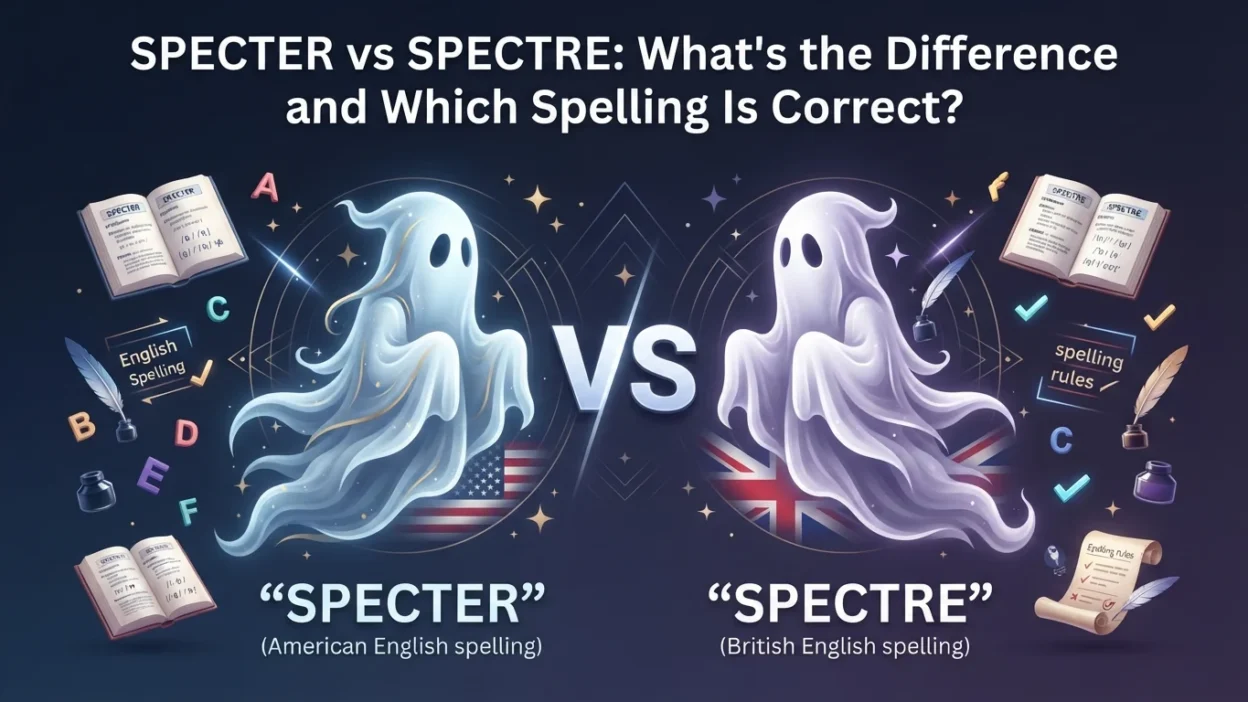
When you come across specter and spectre, it can be difficult to know whether they are two different words or simply two spellings of the same word. The good news is that the distinction is straightforward: both words refer to a ghost, apparition, or frightening supernatural presence. They can also describe something unpleasant that continually threatens or worries people. The main difference is regional spelling, not meaning.
Specter is the standard spelling in American English, while spectre is preferred in British English and is also common in other varieties influenced by British usage. This spelling difference is similar to pairs such as color/colour and center/centre. Understanding the distinction will help you choose the form that fits your audience and maintain consistency in your writing. In this guide, we’ll explain specter vs spectre, provide clear examples, cover common mistakes, and show you when to use each spelling.
Quick Answer
Specter and spectre have the same meaning: a ghost, apparition, or something frightening that threatens or worries people. Specter is the preferred American English spelling, while spectre is the standard British English spelling. Choose the spelling that matches your variety of English.
Why People Confuse It
People confuse specter vs spectre because the two words have:
- The same pronunciation in most contexts
- The same meaning
- The same grammatical function
- Different spellings based primarily on regional English conventions
Both forms can describe a supernatural ghost or an imagined frightening presence.
For example:
A mysterious specter appeared in the old house.
In British English, you would normally write:
A mysterious spectre appeared in the old house.
The difference is simply the spelling.
First Word: Specter
Specter is the standard spelling in American English.
A specter can mean a ghost or apparition, especially one that is frightening or disturbing. The word is also frequently used figuratively for something unpleasant that seems likely to happen.
Examples of “specter”
- The villagers claimed to have seen a specter in the cemetery.
- The specter of war worried the entire country.
- A strange specter appeared near the castle.
- The company faced the specter of bankruptcy.
The figurative use is particularly common in news, politics, business, and formal writing.
For instance:
The rising cost of living has raised the specter of economic instability.
Here, specter does not mean an actual ghost. It means an unpleasant possibility or threat.
Second Word: Spectre
Spectre is the standard spelling in British English.
It has exactly the same meanings as specter. British writers may use spectre for both literal ghosts and figurative threats.
Examples of “spectre”
- The villagers believed a spectre haunted the castle.
- The spectre of war continued to worry the population.
- The novel begins with the appearance of a mysterious spectre.
- The spectre of unemployment is affecting many families.
If your audience follows British spelling conventions, spectre is usually the better choice.
Specter vs Spectre: Comparison Table
| Feature | Specter | Spectre |
| Meaning | Ghost, apparition, or threatening possibility | Ghost, apparition, or threatening possibility |
| Spelling | American English | British English |
| Pronunciation | Same | Same |
| Part of speech | Noun | Noun |
| Literal meaning | A frightening ghost or apparition | A frightening ghost or apparition |
| Figurative meaning | A threatening or disturbing possibility | A threatening or disturbing possibility |
| Example | The specter of war loomed ahead. | The spectre of war loomed ahead. |
| Common usage | U.S. English | U.K. English |
Bottom line: The meaning does not change. The spelling depends mainly on the variety of English you are using.
When to Use Each
Use “specter” in American English
Choose specter when writing for an American audience or following American spelling conventions.
Example:
The specter of inflation remains a concern for consumers.
Use “spectre” in British English
Choose spectre when following British English spelling.
Example:
The spectre of inflation remains a concern for consumers.
What about international English?
Both spellings may appear in international writing. However, consistency matters more than choosing one form universally.
If your article, website, or publication uses British spelling, use spectre. If it follows American spelling, use specter.
Specter vs Spectre Examples
Here are more examples showing how both spellings work:
- American: The specter of war frightened the citizens.
British: The spectre of war frightened the citizens. - American: A pale specter appeared at the window.
British: A pale spectre appeared at the window. - American: The story describes a terrifying specter.
British: The story describes a terrifying spectre. - American: The specter of poverty continues to trouble the region.
British: The spectre of poverty continues to trouble the region. - American: They believed the old mansion was haunted by a specter.
British: They believed the old mansion was haunted by a spectre. - American: The specter of failure kept him awake at night.
British: The spectre of failure kept him awake at night. - American: The novel opens with a mysterious specter.
British: The novel opens with a mysterious spectre. - American: A specter seemed to move through the dark hallway.
British: A spectre seemed to move through the dark hallway. - American: The specter of unemployment worried young workers.
British: The spectre of unemployment worried young workers. - American: The politician warned about the specter of economic collapse.
British: The politician warned about the spectre of economic collapse. - American: The children were frightened by the specter in the story.
British: The children were frightened by the spectre in the story. - American: The specter of defeat became increasingly difficult to ignore.
British: The spectre of defeat became increasingly difficult to ignore.
Notice that the sentence structure and meaning remain the same. Only the spelling changes.
Common Mistakes
1. Thinking the words have different meanings
This is the most common misunderstanding.
Specter and spectre generally mean the same thing. The difference is primarily regional spelling.
2. Mixing spelling conventions
You may use American spelling in one sentence and British spelling in another.
For example:
The specter of war was followed by a spectre of economic hardship.
This isn’t necessarily grammatically wrong, but it can make your writing inconsistent if both words are intended to follow the same spelling system.
3. Assuming “spectre” is a different pronunciation
The spelling difference does not normally create a different pronunciation.
4. Using “specter” when following British style
If you are writing specifically in British English, spectre is the conventional choice.
5. Using “spectre” in an American English article without a reason
American publications generally prefer specter. Using spectre can look like an accidental British spelling.
Memory Trick
A simple way to remember specter vs spectre is:
Specter = American English
Spectre = British English
Think of the extra -re in spectre as matching other familiar British spellings such as:
- centre
- theatre
- metre
American English commonly uses:
- center
- theater
- meter
So if you’re writing for an American audience, think specter. If you’re following British spelling, think spectre.
American vs British English
The difference between specter and spectre follows a broader pattern in English spelling.
American English often simplifies or changes certain traditional British spellings. Compare:
| American English | British English |
| specter | spectre |
| center | centre |
| theater | theatre |
| meter | metre |
| color | colour |
| favor | favour |
This does not mean one spelling is more correct than the other. Both specter and spectre are established English spellings.
The key is to match the spelling system used by your audience, publication, school, employer, or style guide.
Similar Words
Several words are related to specter/spectre, but they are not always interchangeable.
Ghost
A ghost is the spirit or supernatural appearance of a dead person.
The children thought they saw a ghost.
Apparition
An apparition is a supernatural or unusual appearance, often associated with a ghost.
A strange apparition appeared in the doorway.
Phantom
A phantom can mean a ghost or something that seems to exist but is not real.
A phantom appeared in the fog.
Spirit
Spirit has a much broader range of meanings. It can refer to a supernatural being, a person’s character, or a general feeling.
Haunt
Haunt is primarily a verb meaning to visit or remain in a place as a ghost or to persist in someone’s thoughts.
The memory continued to haunt her.
Wraith
A wraith is a ghostly or shadow like figure, often associated with death.
These words overlap with specter/spectre, but they are not perfect synonyms in every context.
FAQs About Specter vs Spectre
Is “specter” or “spectre” correct?
Both are correct. Specter is the standard American English spelling, while spectre is the standard British English spelling.
Is spectre British or American?
Spectre is primarily the British English spelling. It is also used in other English varieties that follow British spelling conventions.
Is specter American English?
Yes. Specter is the preferred spelling in American English.
Do specter and spectre mean the same thing?
Yes. Both can refer to a ghost, apparition, or frightening supernatural presence. They can also describe a threatening or troubling possibility figuratively.
Are specter and spectre pronounced the same?
Yes, they are generally pronounced the same despite the different spellings.
Which spelling should I use in an American essay?
Use specter if your essay follows American English conventions.
Which spelling should I use in British English?
Use spectre when following standard British English spelling.
Final Verdict
Specter and spectre are not different words with different meanings. They are two regional spellings of the same noun. Specter is preferred in American English, while spectre is preferred in British English.
When choosing between them, focus on consistency. If your writing follows American English, choose specter. If it follows British English, choose spectre. Once you remember this regional distinction, choosing the correct spelling becomes easy.
Remember This
Specter = American English 🇺🇸
Spectre = British English 🇬🇧
Same meaning. Same pronunciation. Different regional spelling.
Conclusion
The specter vs spectre distinction is a spelling difference rather than a difference in meaning. Both words can describe a ghostly apparition or, figuratively, a troubling threat or possibility. The form you choose should depend on the English variety you are using.
For American English, write specter. For British English, write spectre. If you’re writing for an international audience, simply follow the spelling convention used throughout your content and remain consistent.

Quinn Mitchell is celebrated for historical fiction that combines authentic settings, unforgettable characters, and compelling narratives. His thoughtful writing brings history alive while inspiring curiosity and deeper understanding among readers.